


Maintenance Check Flights (MCF): Why They're Essential for Aircraft Lessors, Airlines, MROs and CAMOs
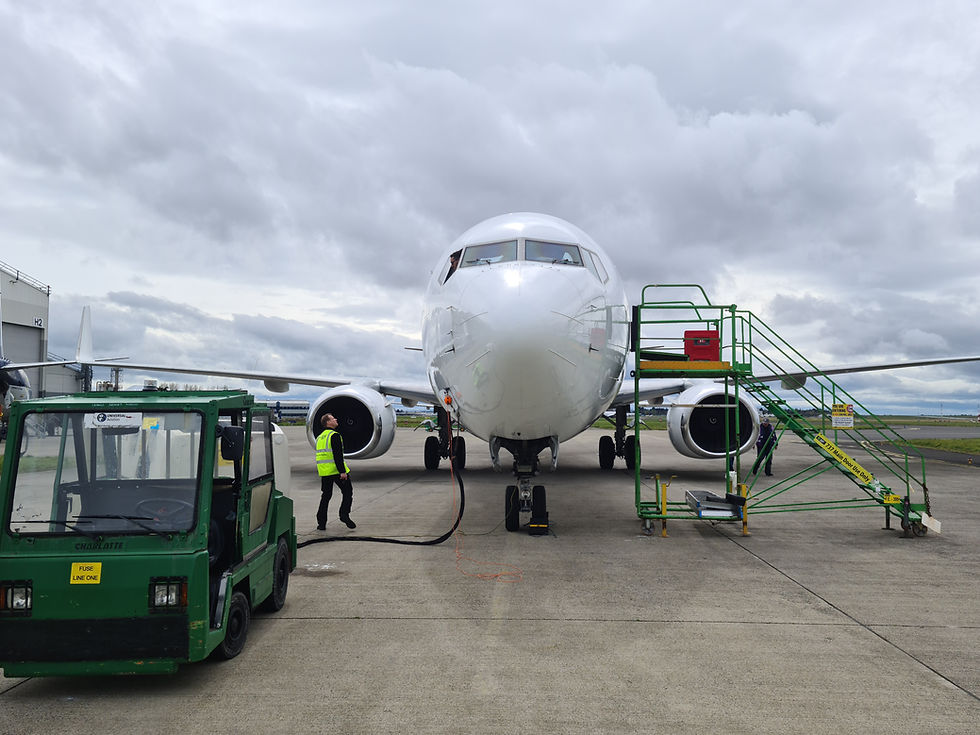
Maintenance Check Flights: Protecting Aircraft, Assets and Operational Readiness
Following a major maintenance event, aircraft modification, engine change or extended storage period, one important question remains:
Is the aircraft truly ready to return to service?
While extensive ground testing verifies many aircraft systems, only a Maintenance Check Flight (MCF)—also commonly referred to as a post-maintenance test flight—can confirm that the aircraft performs safely and as intended in the air.
For aircraft lessors, airlines, Maintenance Repair Organisations (MROs) and Continuing Airworthiness Management Organisations (CAMOs), an MCF is far more than a regulatory exercise. It protects valuable assets, minimises operational risk and provides confidence that maintenance work has achieved its intended outcome before passengers or cargo are carried.
Whether returning an aircraft to an airline, completing a lease transition or releasing an aircraft from heavy maintenance, a professionally conducted Maintenance Check Flight provides an additional layer of assurance that protects everyone involved.
What is a Maintenance Check Flight?
A Maintenance Check Flight is a specially planned flight carried out following maintenance activities that may have affected the aircraft's handling, systems or performance.
Unlike a routine positioning flight or delivery flight, an MCF is designed specifically to evaluate aircraft performance under controlled conditions using predetermined test procedures.
The purpose is to verify that maintenance work has been completed correctly and that all affected systems operate within the manufacturer's specifications.
MCFs are commonly required after:
Heavy maintenance (C Checks and structural inspections)
Major modifications
Engine changes
Flight control maintenance or rigging
Landing gear replacement or overhaul
Avionics upgrades
Significant defect rectification
Aircraft returning from long-term storage
Lease return programmes
Aircraft redelivery projects
Passenger-to-Freighter (P2F) conversions
Why Are Maintenance Check Flights Important?
Ground testing can only verify so much.
Many aircraft systems can only be fully evaluated during flight.
Examples include:
Aircraft handling characteristics
Autopilot performance
Flight director operation
Engine performance under varying power settings
Pressurisation system operation
Navigation systems
Stall warning systems
Flight control behaviour
High-speed handling
Climb performance
Fuel system operation
Aircraft vibration characteristics
Identifying an issue during an MCF is significantly preferable to discovering it after the aircraft has re-entered commercial service.
The Aircraft Lessor's Perspective
For aircraft lessors, every day an aircraft remains off lease represents lost revenue.
Delays during aircraft transitions often occur because:
Technical discrepancies are identified late.
Maintenance work requires further rectification.
Test flights cannot be scheduled quickly.
Suitable qualified crews are unavailable.
Documentation is incomplete.
An independently managed Maintenance Check Flight provides reassurance that the aircraft has been properly evaluated before delivery to the next operator.
It also reduces technical disputes during lease return and helps protect the aircraft's residual value.
The Airline Perspective
Airlines operate under extremely demanding schedules.
An aircraft delayed after maintenance can affect:
Flight schedules
Passenger confidence
Fleet availability
Operational costs
Crew utilisation
Engineering teams need confidence that major maintenance has fully resolved reported defects before the aircraft returns to revenue service.
A professionally planned MCF allows airlines to verify aircraft performance without exposing passengers to unnecessary operational risk.
The MRO Perspective
Maintenance organisations invest thousands of engineering hours returning aircraft to service.
However, one missing element can delay aircraft release:
Access to qualified Maintenance Check Flight crews.
Many MROs do not employ dedicated test flight crews for every aircraft type they maintain.
As a result, aircraft can occupy valuable hangar space while waiting for:
Qualified pilots
Flight planning
Regulatory approvals
Suitable weather
Operational availability
Partnering with a specialist Maintenance Check Flight provider allows MROs to complete projects more efficiently while improving customer satisfaction.
The CAMO Perspective
For CAMOs, compliance is everything.
Following major maintenance, Continuing Airworthiness Management Organisations are responsible for ensuring that:
Required inspections have been completed.
Airworthiness requirements have been satisfied.
Applicable Maintenance Check Flights have been conducted.
Any defects identified during flight have been rectified.
Appropriate documentation has been completed before return to service.
Working alongside an experienced MCF provider simplifies this process while supporting continued regulatory compliance.
What Happens During a Maintenance Check Flight?
Every aircraft type has manufacturer-specific test procedures, but a typical MCF includes:
Before the Flight
Review of maintenance documentation
Engineering briefing
Aircraft records review
Risk assessment
Flight planning
Test card preparation
Crew briefing
During the Flight
The crew may evaluate:
Engine performance
Aircraft handling
Flight controls
Autopilot
Flight management system
Navigation equipment
Pressurisation
Hydraulic systems
Electrical systems
Air conditioning
Stall warning
Landing gear operation
High-speed characteristics
Low-speed handling
Emergency system checks where applicable
After Landing
Following completion of the flight:
Engineers debrief the crew.
Aircraft defects are recorded.
Further maintenance is carried out if required.
A detailed Maintenance Check Flight report is completed.
The aircraft is either released to service or returned for further rectification.
Pilot Qualifications for Maintenance Check Flights
Conducting a Maintenance Check Flight requires considerably more than simply holding a type rating.
The pilots must possess the knowledge and experience to safely evaluate aircraft performance while understanding the maintenance work that has been carried out.
Typically, Maintenance Check Flight pilots should have:
A valid ATPL or CPL, as appropriate to the operation.
A current type rating for the aircraft.
Recent experience on type.
Current licence proficiency checks.
A thorough understanding of aircraft systems.
Familiarity with manufacturer Maintenance Check Flight procedures.
Specific Maintenance Check Flight training.
Strong knowledge of abnormal and emergency procedures.
Excellent communication with maintenance engineers.
Many operators also require significant command experience before assigning pilots to conduct Maintenance Check Flights.
The objective is not simply to fly the aircraft, but to accurately identify abnormal aircraft behaviour and communicate technical findings to engineering teams.
EASA Requirements for Maintenance Check Flights
Within Europe, Maintenance Check Flights are governed primarily through Commission Regulation (EU) No. 965/2012 (Air Operations) and associated Acceptable Means of Compliance (AMC) and Guidance Material (GM).
EASA recognises two broad categories:
Level A Maintenance Check Flight
Conducted where no abnormal aircraft behaviour is expected.
These flights generally verify that maintenance has restored the aircraft to its normal operating condition.
Level B Maintenance Check Flight
Required where aircraft systems are intentionally operated outside their normal service envelope or where abnormal configurations or conditions are expected.
Because these flights involve increased operational risk, EASA expects:
Enhanced risk assessment.
Operator-approved procedures.
Appropriate crew competence and training.
Additional operational oversight.
The operator remains responsible for ensuring that the flight is conducted in accordance with its approved procedures and that any required approvals are in place.
Why Experience Matters
Maintenance Check Flights often take place under demanding operational circumstances:
Aircraft redeliveries
Lease returns
Tight maintenance schedules
Ferry flights immediately following maintenance
International aircraft transitions
Selecting an experienced flight operations provider reduces risk, improves efficiency and ensures that aircraft can return to service with confidence.
How Vanguard Air Services Supports Lessors, Airlines, MROs and CAMOs
Vanguard Air Services provides professional Maintenance Check Flight (MCF) support worldwide for commercial aircraft and business jets.
Our experienced team understands the technical, operational and commercial pressures facing aircraft owners, lessors, airlines and maintenance providers.
We support customers with:
Maintenance Check Flights
Post-maintenance test flights
Functional Check Flights
Aircraft acceptance flights
Aircraft redelivery support
Lease transition support
Ferry flights following maintenance
Aircraft demonstration flights
Worldwide flight crew provision
Operational planning and flight support
Our crews include experienced, type-rated pilots across a wide range of commercial aircraft and business jet types, enabling rapid mobilisation wherever the aircraft is located.
Whether your aircraft is completing heavy maintenance, preparing for lease return or returning to commercial service, Vanguard Air Services can provide the expertise needed to deliver a safe, efficient and professionally managed Maintenance Check Flight.
Why Choose Vanguard Air Services?
When selecting a Maintenance Check Flight provider, experience matters.
Vanguard Air Services offers:
Worldwide operational capability.
Experienced type-rated flight crews.
Support for commercial aircraft and business jets.
Rapid mobilisation.
Extensive experience with aircraft transitions, ferry flights and lease returns.
Close collaboration with engineering teams, CAMOs and MROs.
Flexible solutions tailored to each maintenance event.
Our goal is simple: to help our customers return aircraft to service safely, efficiently and with confidence.
Frequently Asked Questions
When is a Maintenance Check Flight required?
An MCF is typically required following major maintenance, significant repairs, aircraft modifications, engine changes, landing gear replacement, extended storage or whenever the maintenance programme or manufacturer recommends a post-maintenance flight evaluation.
What is the difference between a Maintenance Check Flight and a ferry flight?
A ferry flight relocates an aircraft between locations. A Maintenance Check Flight is specifically conducted to verify aircraft performance following maintenance or modification. In some cases, a ferry flight may take place after a successful MCF.
Who can conduct a Maintenance Check Flight?
Only appropriately licensed, type-rated and current flight crew with the necessary competence, experience and operator authorisation should conduct an MCF. Some flights, particularly those involving abnormal configurations, require additional procedures and crew training.
Can Vanguard Air Services support Maintenance Check Flights worldwide?
Yes. Vanguard Air Services supports aircraft lessors, airlines, MROs and CAMOs globally with Maintenance Check Flights, post-maintenance test flights, aircraft ferry services and lease transition support for commercial aircraft and business jets.


Comments